
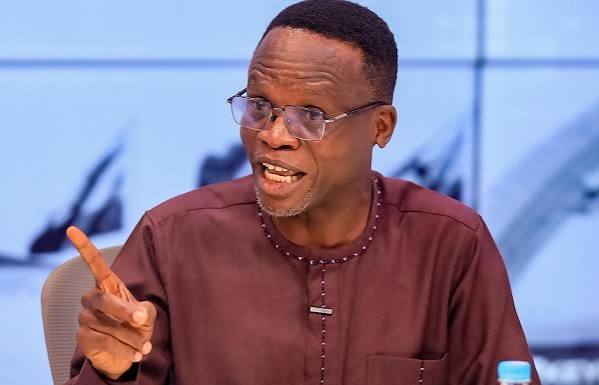
Development Economist Dr. George Domfeh has challenged claims that Ghana’s declining debt-to-GDP ratio is solely the result of the current government’s economic management, arguing that the country’s debt restructuring programme under the previous administration played a significant role in reducing the nation’s debt burden.
Speaking on Adom FM’s Dwaso Nsem programme, Dr. Domfeh said Ghana’s debt-to-GDP ratio had already begun declining before the current administration assumed office, largely due to the debt restructuring measures initiated by the previous government.
His comments come after Finance Minister Dr. Cassiel Ato Forson, while presenting the 2026 Mid-Year Budget Review in Parliament on July 23, announced that Ghana’s debt-to-GDP ratio had fallen to 45%, citing the improvement as evidence of the country’s strengthening fiscal position.
According to Dr. Domfeh, the reduction in Ghana’s debt burden cannot be attributed solely to the policies of the current administration because the debt restructuring agreement with external creditors had already begun delivering results before the government took office.
“When Nana Addo Dankwa Akufo-Addo was leaving office, Ghana’s debt-to-GDP ratio had dropped to 61.8% in December 2024,” he said.
The economist explained that after the new administration assumed office, Ghana continued discussions with its creditors as part of the debt restructuring programme, leading to further reductions in the country’s debt obligations.
“About US$2.8 billion, which was part of the debt restructuring, contributed significantly to the reduction in the debt-to-GDP ratio. The restructuring moved the ratio from about 80% to 51.8%, and further adjustments helped bring it down to around 45%,” he stated.
He argued that presenting the decline as being entirely the result of the current government’s fiscal management does not reflect the full picture.
“So, if you say it is because of the things you have done well that the debt-to-GDP ratio has reduced, then that is not entirely true.”
Dr. Domfeh noted that although international credit rating agencies have acknowledged Ghana’s recent economic progress, much of that improvement has also been linked to the successful implementation of the country’s debt restructuring programme.
“Let us pay attention and stop the propaganda and politics we attach to the economy,” he said.
The development economist suggested that the Finance Minister could have simply announced the current debt-to-GDP ratio without implying that the reduction resulted solely from the present administration’s policies.
“It would have been better for Ato Forson to say the debt-to-GDP ratio is at 45% and leave it there, rather than saying it was 61% and because of their management they have brought it down to 45%. That is not entirely accurate,” he remarked.
Dr. Domfeh further explained that the previous government’s debt restructuring programme, particularly the restructuring of Ghana’s US$13.1 billion Eurobond debt, created significant fiscal space that continues to benefit the economy.
According to him, creditors agreed to debt relief measures, including reductions in repayment obligations and extensions of repayment periods, to support Ghana’s economic recovery.
“The creditors agreed to a haircut, which reduced part of the debt we owed. They also extended the maturity period of some debts because the economy was struggling, giving the country more time to repay,” he explained.
He said those measures substantially improved Ghana’s fiscal outlook before the current administration assumed office.
“Some of the fiscal space we are enjoying today is because of the work done under the previous government. So, if the Finance Minister says the reduction is only because of their fiscal prudence, then that is not the full picture,” Dr. Domfeh added.


