
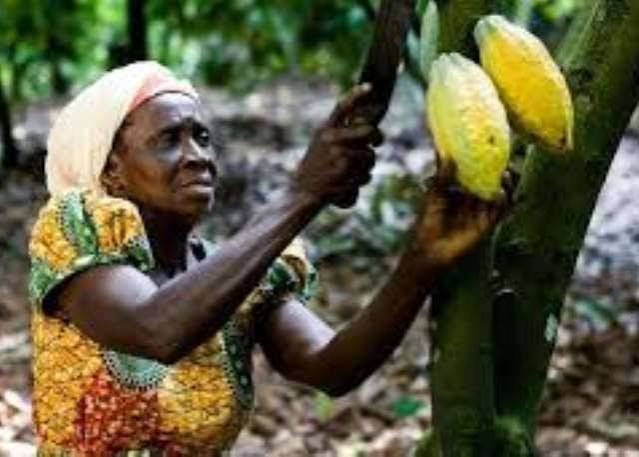
Ghana’s cocoa production is projected to decline by at least 16% during the 2026/2027 crop season, according to the Ghana Cocoa Board (COCOBOD), which attributes the expected downturn to adverse weather conditions, crop disease, ageing farms and the growing impact of illegal mining.
The forecast comes amid growing concerns from cocoa farmers in the country’s main producing regions over falling pod yields ahead of the new season, which begins in September 2026.
According to COCOBOD, the anticipated decline is linked to a combination of climatic and biological factors affecting cocoa production.
The regulator said the outlook reflects the likelihood of El Niño weather conditions, excessive rainfall recorded in May and June 2026, and the cocoa tree’s natural fruit-bearing cycle, which alternates between high-yield and low-yield seasons.
COCOBOD also reported a low cherelle load, the number of young cocoa pods that survive to maturity, in the Western and Western North regions, indicating weaker production prospects for the coming season.
The regulator noted that the outlook in the Western and Western North regions, which together account for more than half of Ghana’s cocoa production, has been worsened by several long-standing challenges.
These include:
- Swollen shoot disease affecting cocoa farms.
- Ageing cocoa plantations with declining productivity.
- The expansion of illegal mining, popularly known as galamsey, which has led to the destruction and takeover of cocoa farmlands.
COCOBOD said the combined impact of these factors has significantly reduced cocoa yields in the country’s leading cocoa-growing areas.
The latest production forecast follows earlier warnings from cocoa farmers in the Western and Western North regions, who reported sharply reduced pod counts this season.
Many farmers have expressed concern that prolonged weather disruptions and disease outbreaks are affecting cocoa tree health and reducing harvest volumes.
The expected decline in Ghana’s cocoa output could have implications for global cocoa supplies, as the country remains the world’s second-largest cocoa producer.


, which attributes the expected downturn to adverse weather conditions, crop disease, ageing farms and the growing impact of illegal mining.)